Showing posts with label iOS. Show all posts

Friday, 28 November 2014

Dropbox’s Mobile Apps Are Now Integrated With Microsoft Office


Earlier this month, Dropbox and Microsoft announced a partnership that would see Dropbox offer better support for Microsoft’s Office Suite, including the ability to edit Office docs from the Dropbox mobile app among other things. Today, those integrations have gone live for users of both the Android phone and iOS Dropbox applications.
Explains Dropbox in a blog post announcing the news, users can now edit their Office files when they’re “on the go,” editing them directly from the Dropbox app and accessing the files directly from the Office apps. To use the new feature, you’ll first need update your app to the latest version, then open any Office document, spreadsheet or presentation that’s stored in your Dropbox.
From here, a new “Edit” icon (see above picture) will be available that will allow you to switch over to the new mobile Office apps to make changes to the file. When you’re finished working, those changes will be saved back to Dropbox automatically.
The Dropbox/Microsoft partnership is an extensive deal aimed at increasing collaboration between the two firms, and may have surprised some given that the two companies offer competing products. Microsoft has a Dropbox-like service called OneDrive, but Dropbox’s larger service reaches hundreds of millions of users, including 80,000 businesses.
The agreement announced at the beginning of November included four parts, as reported: the ability to quickly edit docs from Dropbox on mobile, accessing Dropbox docs from Office apps, sharing Dropbox links of Office apps, and the creation of first-party Dropbox apps for Microsoft’s mobile offerings.

Source:Techcrunch

Monday, 7 July 2014

BeamIt Wants to Change The Way We Share Photos


Right now, messaging apps are one of the fastest growing categories in the Android and iOS app marketplaces, as every developer tries to become the next WhatsApp. From stickers and emoticons to free voice and video calls, they offer pretty much everything people need for communication. In such a crowded market, is there really any space for one more messaging app? The team that developed Cooliris (an app that lets you view all your social feeds' images in one place), feels so.
The company has launched BeamIt, a free "visual messaging" app that aims to add context to photo sharing on iOS, with Android and Web versions "coming soon". We got early access to the app, and came away largely impressed, and while we still have a couple of reservations about the concept, there's no denying that the app's philosophy and design are interesting.


BeamIt has common features such as comments, likes and sharing photos with private groups, but the difference is in the design. BeamIt links comments and conversations to photos and makes all of these feel like one thread as opposed to separate events. If you've ever been in a messaging group, you probably know how confusing it can get sometimes.
For instance, someone shares five photos in a group of 10 people. Immediately nine people start commenting about different photos and often it's hard to decipher who is speaking about which photo. BeamIt lets you select any one photo from a big batch and comment on it or comment on all at once. This helps provide context to each comment. You can long-press any photo to comment, like, share or save photos to the camera roll.
Another nice touch to the app is the way it handles multiple photos. We selected 36 photos on an iPhone and saw them appear in a side-scrolling row under the message box. You can take a look at the photos by scrolling sideways and remove any of these before sending. Once you send a large number of photos, they appear in two rows and you can scroll sideways to take a look at them all.

This works for two reasons - one is that you can send a large number of photos in one go (most messaging apps limit that number) and the second is you don't have to keep scrolling up or down to read messages every time someone posts many photos. Therefore, scrolling up and down will show you different conversations around photos, and scrolling horizontally will let you look at the various pictures being talked about in each conversation.
On an iPhone, the advantage is already apparent, but the iPad is where BeamIt shines. The app has an excellent three-column layout - one column lists all the conversation threads, the second shows text and the third shows photos. Once again, a batch of photos sent together can be seen by scrolling sideways, which has a neat slide-out animation on the iPad. If a person comments on a photo, a line links that part of the conversation to the photo, making conversations easy to follow. The way BeamIt marries text to photos is impressive.
Cooliris CEO Soujanya Bhumkar says BeamIt is also different from its competitors because it sends photos in full resolution. 
"All photos are uploaded in full-resolution but the resolution of photos BeamIt downloads depends on your device" he says. "If you're using an iPad 2, the app will download slightly lower quality images as opposed to an iPad with Retina Display."

If you delete a message or photo from a conversation, it gets removed from all recipients' devices. This "unsend" feature is quite nice, but the app doesn't explain this. This means that some users may inadvertently delete photos without knowing that it will get removed from everyone else's devices too.

This works for two reasons - one is that you can send a large number of photos in one go (most messaging apps limit that number) and the second is you don't have to keep scrolling up or down to read messages every time someone posts many photos. Therefore, scrolling up and down will show you different conversations around photos, and scrolling horizontally will let you look at the various pictures being talked about in each conversation.
On an iPhone, the advantage is already apparent, but the iPad is where BeamIt shines. The app has an excellent three-column layout - one column lists all the conversation threads, the second shows text and the third shows photos. Once again, a batch of photos sent together can be seen by scrolling sideways, which has a neat slide-out animation on the iPad. If a person comments on a photo, a line links that part of the conversation to the photo, making conversations easy to follow. The way BeamIt marries text to photos is impressive.
Cooliris CEO Soujanya Bhumkar says BeamIt is also different from its competitors because it sends photos in full resolution. 
"All photos are uploaded in full-resolution but the resolution of photos BeamIt downloads depends on your device" he says. "If you're using an iPad 2, the app will download slightly lower quality images as opposed to an iPad with Retina Display."

If you delete a message or photo from a conversation, it gets removed from all recipients' devices. This "unsend" feature is quite nice, but the app doesn't explain this. This means that some users may inadvertently delete photos without knowing that it will get removed from everyone else's devices too.

Saturday, 28 June 2014

Mac vs. PC: Here are the real differences


The burning rivalry between Mac and PC is one of the most storied rivalries in the history of technology – ruining friendships, bringing down corporations and inspiring some very creative commercials — but do we truly understand the fundamental difference between a Windows PC and a Macintosh? I’m sure many of you do, but for those who don’t have a grasp of the finer details, Computerphile has put together a short video primer explaining how Macs and PCs differ.
Professor Tom Rodden begins by discussing computer systems in their most basic form. You start with the physical hardware, then an operating system, then the applications on that operating system and finally the windowing system which the user directly interacts with. Of course, the way we interact with our computers has changed drastically over the years, but the basic interactions remains the same.


Moving on to the advent of the Macintosh computer, Rodden explains that historically,Microsoft has been a software company. The Surface tablets are the first hardware built by Microsoft in quite some time. Apple, on the other hand, controls both the hardware and the software in its computer business. This means that Apple can “optimize and protect” its computers in ways that Microsoft can’t.
Apple’s operating system can therefore make presumptions about the hardware it will be functioning on because Apple can extensively test its operating system with every piece of hardware it releases. Microsoft doesn’t have this luxury, as dozens of manufacturers create hardware for Windows. This is where device drivers come into play, and why certain accessories or programs might be incompatible from one Windows computer to another.
The obvious downside to siding with Apple is that you’ll only ever have one machine to choose from. This leads to inflated prices, which is why an $1,099 iMac is seen as a bargain. OS X and iOS are both regularly lambasted for bring closed off in comparison to other mobile and desktop operating systems as well. You have more freedom on Windows to customize both hardware and software than you ever will on a Mac.
All of this may sound redundant to those of you who understand the technical distinctions between Macs and PCs, but everyone else should take a few minutes to watch the video above.
SOURCE:
YOUTUBE (COMPUTERPHILE)

Wednesday, 25 June 2014

EverythingMe Releases Its Contextual Launcher Globally


EverythingMe‘s contextual launcher aims to customize your Android home screen so that you get exactly what you need every time you switch on your phone. It’s the results of years of work on mobile discovery. And today, the app is available globally.
 At the time, it was an iPhone app to improve the mobile search experience.
“But the number of search queries are decreasing on mobile,” Ben-David told me. So that’s why the startup started working on something completely different — context.
You might get the Kindle app when you’re at home in the evening, and the Twitter app when you’re waiting at the bus stop in the morning
When it comes to mobile startups, it’s still a brand new world. Modern smartphones only hit the market in 2007, and countless of developers started providing content for this new platform. Hundreds of thousands of apps are now available at our fingertips.
Yet, this is also a challenge. You may have 150 apps on your phone, but chances are that you only use a dozen of them. “Nobody swipes to the third page of apps,” Ben-David said. This is where EverythingMe is useful.
Here’s how it works. When you switch on your Android phone, you will get four apps that are relevant to the time of the day, your location and more. For example, you might get the Kindle app when you’re at home in the evening, and the Twitter app when you’re waiting at the bus stop in the morning.
Sometimes, you are looking for something in particular beyond these four apps. For example, you might want to get the latest world cup results. This app might not necessarily show up in your top four apps as you don’t open the world cup app all year round. EverythingMe automatically organizes apps in smart folders. You will find the world cup app in the “Sports” folder, maybe in the “News” folder as well.
In these smart folders, you will get information cards so that you even get info without opening and app. And below, you will find the relevant apps depending on the category, as well as app suggestions from the Play Store. You won’t have to micromanage your phone to organize apps anymore, and you won’t miss on this cool new app you installed and forgot a few minutes later.
Finally, EverythingMe replaces the search engine of your phone. For example, if you contact someone very often, his or her name will show up at the top.
The team of 65 has received $37 million in funding over the years, and has attracted millions of downloads in its test markets since February. This contextual launcher also powers Firefox OS. Overall, EverythingMe is all about learning about your habits to make your phone even more personal.

Friday, 20 June 2014

Skype 5.1 For iPhoneAnnounced


Skype continues to improve on their iOS offerings by rolling out Skype 5.1 for iPhone (which is a 44MB download), where it will introduce a slew of new features and improvements, where among them include a new press and hold action so that users are able to do away with conversations from recent chats – pretty nifty for those “empty” chats, no? Apart from that, you are also able to perform an edit on a chat message. Sneaky! Apart from that, one is able to tap the “add favorites” link in order to easily fill up your favorites screen with those whom you happen come into contact the most. 

The People list is now capable of matching the desktop better, since there is a spanking new “Skype” filter, while the “online” filter will be able to include users set to online, away and do not disturb. 

These filter settings can be saved too, of course. Microsoft’s Skype intends to continue rolling out additional features to the app, and when the time comes, they will roll them out in order to deliver maximum benefit to the masses. 

Interestingly enough, it was just slightly more than last week that Skype introduced Skype 5.0 for iOS , so it is refreshing to see how fast the next update came about.

Saturday, 14 June 2014

Microsoft Considering Bringing Cortana to Android and iOS Devices


The Redmond giant is considering the expansion of its recently launched virtual assistant - Cortana, and to that end, is evaluating the merits of bringing it to other platforms like Android and iOS, apart from other form factors, like desktops, vehicles, and kiosks.
Cortana is currently available as part of the Windows Phone 8.1 Developer Preview in the US in beta mode. Microsoft also has plans to release it to China and UK in the second half of 2014, while it might reach other countries by 2015.
On Thursday, speaking at the SMX Advanced conference in Seattle, Marcus Ash, Windows Phone Group Program Manager, said Microsoft wants Cortana to be "pervasive" across regions, devices and platforms.
"We want to scale Cortana internationally and across devices. The Android/iOS question is interesting. We're asking, would Cortana be as effective if she didn't have access to the details on your phone? We're still trying to get Cortana adopted on Windows Phone and figure out what it wants to become there. But we're actively talking about this.
I think it's natural to think that an assistant that only runs on one device ... the idea that she will be very pervasive is important to us." said Ash to Search Engine Land's Danny Sullivan.
Although it will be interesting to see whether Android and iOS users, who already have Google Nowand Siri, will actually shift to Cortana, and in what form the Microsoft virtual assistant could appear on those platforms.
Ash also said that for now Microsoft didn't have plans to monetise the Cortana virtual assistant with ads, saying it was far too early in the product's life, "We think we're in the stage right now where we have to build trust with the users. We'll explore monetization eventually, but Cortana is so nascent. It's too early. We know there are commercial opportunities, but in this first year we need to establish what Cortana is and how people use it."
Speaking about how Cortana would affect traditional smartphone search, Ash said the integration of the search box and the virtual assistant is the goal, "The search box is what people know. That's why we're trying to bring [it and Cortana] together. The declarative intent of traditional search saves us so much effort - if you tell us what your interest are via search, Cortana gets so much better. We think Cortana makes you more likely to search, it doesn't replace search."

Thursday, 12 June 2014

Pinterest app comes to Windows Phone!

Pinterest is going for Windows Phone users, having launched the official mobile app for Microsoft’s mobile platform.
As that’s the case with versions of the app for other popular platforms — as in iOS and Android — Pinterest for Windows Phone allows users to pin interesting stuff they come across around the web, and discover new things other Pinterest users have pinned to their boards.
Some of the use cases can be found from the app’s description, which goes as follows:
  • Plan projects-home remodels, car restorations, garden redesigns and other DIYs
  • Dream up your next trip-outdoor adventures, road trips with friends, family outings and exotic vacations
  • Collect your favorite things-illustrations, tattoo ideas, hilarious quotes, tech gadgetry and inspiring art and architecture
  • Save great ideas-articles to read, movies to watch, gifts to buy, fashion and beauty how-tos, food and recipes to cook, fitness tips and lifehacks
  • Get organized for a party-wedding decor, birthday themes, costume ideas and game day menus
Pinterest for Windows Phone is available as a free download and you can get it from the link below.
Pinterest (FREE) [Windows Phone Marketplace]

Facebook updates iOS and Android apps with Nearby Friends invites and offline likes


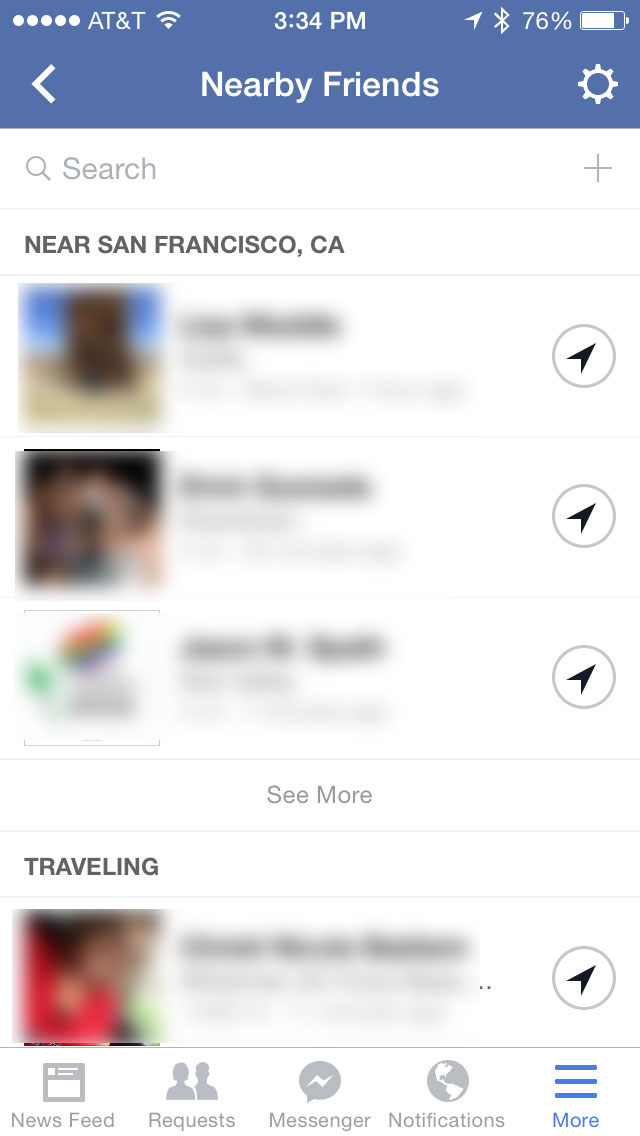
Fcebook has two updates on the mobile world today. Facebook for iOS 11.0 got new additions to its Nearby Friends  feature while Android hit version 10.0 with offline posting. Both updates are available now in the Google Play Store and App Store.
0611 nearby1 220x390 Facebook updates iOS and Android apps with Nearby Friends invites and offline likesFor the iOS version Facebook only posted that today’s update included “improvements for reliability and speed.” But TechCrunch reportsthat after a bit of digging, it found two new updates for Nearby Friends. In the US version of the app, the social network has added search and invite friends buttons.
For Android, Facebook has added the following new features:
  • Like posts, photos and Pages when you’re offline
  • Remove tags you’ve created
  • Remove tags of yourself that your friends have created
  • Turn post notifications on and off
  • Improvements to speed and reliability
Being able to remove tags that your friends have created is a wonderful way to make sure some of the more embarrassing things you did last night don’t end up in your Timeline.
➤ Facebook for iOS and Android

Saturday, 31 May 2014

BBM 2.2 for Android and iOS Brings Easier Sign-Up, Friending, and More

It was late last year that Canadian smartphone manufacturer BlackBerry released its BlackBerry Messenger (BBM) on Android and iOS platforms for free. Now the latest version of BBM (version 2.2) is available for download on Google Play, with the iOS version all set to hit the App Store in the coming days.
On the official BlackBerry blog, Inside BlackBerry, Jeff Gadway, head of product and brand marketing writes about the new version which has hit the Google Play store on Wednesday, "This next release (v.2.2) is focused on streamlining key aspects of the BBM experience. Our goal was to make it simpler for new users to join the BBM community and to make it faster and easier to add new BBM contacts."
The new features on BBM v2.2 for Android include an easier way to add contacts via email, wherein a user who receives a BBM invite by email can just become a contact by clicking on the link provided, rather than sending a PIN invite back, as is the current method. Even signing up for BBM is easier. All that new users require are an email ID, name and password, and they can start using it.
On the cosmetic side there are 16 new emoticons that will be added to the new version. These include a hotdog, hacker, a pair of hot lips amongst others. The 'Updates' tab has been renamed to 'Feeds', to represent a user better. It will include latest statuses and profile photos from BBM contacts and newer posts from the BBM channels that users follow. The latest version also brings a range of bug fixes and performance improvements.
The updated BBM v2.2 app Android version can be downloaded from Google Play. In addition to that the blog also makes a mention of the fact that there is something new in store for BlackBerry users. While Gadway has not given away much details in the post, he does write that the special release of the BBM for BlackBerry smartphones will be for the BBOS and BlackBerry 10 smartphones. "This special release of BBM for BlackBerry smartphones will include many of the things we've talked about here...and a few special things added for good measure," he writes.
It is also important to note that the previous update which had come to BBM (for Android, BB10 and iOS) around two months ago offered larger and bolder images, brought sticker support, as well as the ability to share photos in multi-person chats. It also increased the file sharing limit from 6MB to 16MB.
Windows Phone is still the only major smartphone ecosystem BBM has not yet made a foray into. It was however confirmed by BlackBerry that it is looking for a Q2 2014 release of BBM for Windows Phone.

iOS 8 adoption target for iPad

People are always comparing iOS to Android and this has generated some interesting debates, as there are pros and cons for both platforms, but when it comes to adoption rates for a new version of either mobile OS, well it is Apple that claims the prize. Adoption rates are always higher for a new version of iOS because it is always compatible with almost all iPads, iPhones and iPod touches.

A recent study from Chitika’s analytics team has found that iOS 7 adoption for the iPad was 85 percent, which compared to 82.9 percent for iOS 6 is considered a great achievement. It is for this very reason why we believe that Apple will have an even greater iOS 8 adoption target for the iPad.

According to Chitika there has been greater growth in people using iOS 7 on the iPad over the last 3 months, which makes sense because some iOS users put off installing a new version until they know it is as stable and all the kinks have been ironed out.

We know that iOS 7 still has its issues, but it is far better than when it was first released. However, we hope to see what Apple has planned for iOS 8 on Monday during WWDC 2014. Apple will not go into as much detail as they usually do, as there is to be a greater focus on OS X 10.10 , but we should find out some of the main iOS 8 features.

One feature we hope to see is support for iOS to OS X AirDrop , as no doubt this could help increase adoption rate because this is something we have been wanting for several years now. It’s not just the iPad that had an increased adoption rate with iOS 7, as the iPhone also saw an increase to 89.7 percent, but we have to warn that these figures might not be as accurate, although there is still a clear increase.

Sunday, 6 April 2014

Sony is the number two smartphone manufacturer in India by value of sales, leap frogging over Apple

Samsung is the largest smartphone
manufacturer in India. But when
Sammy looks down, it no longer sees
Apple chasing it. Instead, Japanese
manufacturer Sony has surpassed
Apple to become the second largest
smartphone manufacturer in the
country. Sony has been able to leap
over the producer of the iPhone, by
concentrating on low priced handsets
in the range of 10,000 ($166 USD) Rs
to 20,000 Rs. ($333 USD). A 300 Crore
($65 million) marketing campaign also
helped.
According to research firm IDC, based
on the value of phones sold, Sony's
share of the Indian smartphone market
hit 9.1% in the fourth quarter of 2013.
While that was well behind Samsung's
43% slice of the Indian smartphone
pie, it was 2.1 percentage points
ahead of Apple's 7% share for the
three months ended in December.
Looking at the actual number of
phones sold in the fourth quarter,
Samsung was on top with a 38%
share. Micromax was next with 13%,
followed by Sony and Apple. The two
had volume shares of 5.5% and 2% of
the Indian smartphone market,
respectively.
The top phones for Sony in India
during that quarter, were the Sony
Xperia M Dual and the Sony Xperia C .
For the quarter that just ended in
March, analysts say that Sony was
hurt by Apple's re-release of the Apple
iPhone 4
in the country, as an entry-level model
priced at $375. In addition, the forked-
Android powered Nokia X could also
have been a tough challenger for
Sony's entry-level Android phones in
the region.
"Some of the top selling models for Sony
are Xperia M Dual and Xperia C priced in
this bracket, which is one of the fastest
growing segments in the Indian
smartphone market." -Manasi Yadav,
senior market analyst, IDC India

Tuesday, 22 October 2013

BlackBerry Messenger available for Android and iOS via 'line-up system'

BlackBerry Ltd said on Monday it has
begun to roll out its BlackBerry
Messenger (BBM) service to users of
Android and iPhone devices.

The long-awaited cross-platform
offering, which was delayed after
issues arose following the initial launch
last month , is now being rolled out in a
phased manner.

"To help manage this unprecedented
pent-up demand for BBM, we are
implementing a simple line-up system to
ensure a smooth rollout," Andrew
Bocking, who heads the BlackBerry's
BBM business, said in a blog post on the
company's website.

BlackBerry said last week that 6 million
Android and iPhone customers had pre-
registered for the launch.
The company said those that had
already signed up for the service at
BBM.com are being allowed to use the
platform right away, while others will
be signed on as fast as possible.

Saturday, 19 October 2013

Has any phone in 2013 made you switch platforms?

We're in that final stretch of months
before 2013 officially comes to an end,
and it's been a pretty wild year for
mobile all year long.

In the beginning, we saw BlackBerry's
plans and release of BlackBerry 10. In
the following months we saw the
release of two of the most anticipated
Android flagships of the year, the HTC
One and the Samsung Galaxy S4. We
finally found out the dark and
mysterious details of Google's "X"
phone, which turned out to be none
other than the Moto X, which featured
just about none of the things leaks,
rumors and hopes predicted that it
would. Nokia pushed the envelope even
further with their Nokia Lumia line,
famous for its notably good cameras
for a smartphone, by releasing the
Nokia Lumia 1020 with its 41-megapixel
camera. We also have phones like the
iPhone 5s, the Nexus 5, the Galaxy
Note 3 and the LG G2 . Yep, it's been a
pretty good year for mobile.

New phones are released all the time.
But regardless of how many phones
can be produced, each smartphone is
more than likely using one of four of
the most popular mobile platforms that
we have available to us today: iOS,
Android, Windows Phone or BlackBerry.

These platforms are constantly
changing and tweaking in order to
become the best, and I have to say
that this year has had one of the
most interesting combinations of new
hardware and new software I have
seen in a while. If you guys have had
any thoughts like I have, you've
probably considered jumping from
whatever phone it is that you have to
something new - perhaps you even
made the switch.

Did any new phones tickle your fancy
enough to make you switch this year?
One did for me (get it? One ? Ha!)
Actually, I should say two . Initially, I
was more intrigued by the Galaxy S4.
However, just as I had suspected in
previous thoughts mentioned across my
articles, there is such a thing as a
phone that's too big for some people.

It seems that a 5" screen is just too
much for me to be able to hold without
dropping onto the floor, my face, or
whatever else I happen to be holding
my phone over. Aside from that and
some apparent issue with overheating
(as in the phone felt hot - really hot
- but didn't show much adverse
effects from it) the phone would have
been dandy. I really did like the
camera and all of the features. But
the fact that I couldn't even hold the
phone comfortably bothered me more
than anything, and I ended up
switching out for the HTC One.
Switching from iOS back to Android
was a lot easier than I thought it
would be, mostly because I still
remembered Android as being the slow,
buggy OS that it was back in 2010. But
once I decided to make the jump back
to Android from iOS after being mostly
happy with iOS for the better part of
two years, I was honestly surprised at
how well Android had adapted.
Whether
it was the advances that Android made
over the past couple of years, or
perhaps just the fact that I had
lowered my expectations when I
switched to the One and my
expectations were surpassed, I am still
to this day pretty darn happy with my
One. Although I will once again stress
that the purple tint on my camera is
still an issue that wasn't fixed since
updating to the official Android 4.3
build. Aside from that, the phone is
fantastic. Great build, great feel,
great battery life, and runs smooth
like butter.

I even entertained the thought of
switching to BlackBerry or Windows
Phone as well, considering the only
hands-on experience I've had with the
devices are limited to retail store
displays. BlackBerry was intriguing; I
was interested in seeing how
BlackBerry 10 worked on the
traditional BlackBerry form factor of
having a small screen and a full
physical QWERTY keyboard. I was also
intrigued by the Z10, BlackBerry's
first attempt at what might be
considered a more "normal" look for a
modern smartphone. However, the lack
of applications made specifically for
BlackBerry wasn't exactly inviting. I
will admit, it is nice that several what
I would consider "important"
applications that were initially made
for Android can be "sideloaded" onto
BlackBerry 10, but in the end I wasn't
exactly thrilled with the idea. The same
"lack of application" problem stopped
me from Windows Phone, but definitely
to a lesser degree.
I was mostly
interested in the fact that the Lumia,
at the time, had some of the best
cameras that a smartphone could have.
I also dig the minimalistic interface of
Windows Phone.
Overall, I'm happy I switched to the
One. It's not the first time I've
switched, nor will it be the last, but I
am happy that I was able to switch to
a phone that I thought I would like,
and ended up actually liking it, because
I'm not always that lucky.
Readers, did you find a phone this
year that made you switch platforms?
Which platform did you come from, and
which one did you go to? Are you
happy with the decision? Let us know
your thoughts in the comments below!

Thursday, 8 August 2013

Android's smartphone marketshare rises to nearly 80 percent: IDC

Smartphones powered by Google's
Android software increased their global
market share as iPhones lost ground in
the absence of new models being
unleashed by Apple, the International
Data Corporation reported Wednesday.
Android's share of the smartphone
market grew to 79.3 percent in the
second quarter while that of iPhone
slipped to 13.2 percent from 16.6
percent in the same three-month
period last year, according to IDC
figures.

"The iOS decline in the second quarter
aligns with the cyclicality of iPhone,"
said IDC mobile phone research team
manager Ramon Llamas, referring to
the software platform on which the
Apple handsets are built.
"Without a new product launch since
the debut of the iPhone 5 nearly a
year ago, Apple's market share was
vulnerable to product launches from
the competition."
Apple is "well positioned" to recapture
market share with the release later
this year of a new iPhone and the
next-generation iOS mobile operating
system, according to Llamas.
IDC reported that 187 million Android-
powered smartphones were shipped in
the second quarter of the year as
compared to 31.2 million iPhones.
Smartphones powered by Microsoft
Windows software showed the biggest
jump, hitting 3.7-percent of the
market in a 77.6 percent rise that
"re-enforced" the mobile platform's
third-place position, according to IDC.

The gain was driven by Nokia, which
released hot new Windows smartphones
and accounted for just shy of 82
percent of the 8.7 million Windows
phones shipped worldwide during the
quarter.
"Last quarter we witnessed Windows
Phone shipments surpassing BlackBerry
and the trend has continued into the
second quarter," said IDC mobility
tracker program manager Ryan Reith.
"Nokia has clearly been the driving
force behind the Windows Phone
platform, and we expect that to
continue."
Ailing Blackberry saw its share of the
global smartphone market shrink to 2.9
percent from 4.9 percent in the second
quarter last year, IDC reported.
A total of 236.4 million smartphones
were shipped during the quarter in a
51.3 percent rise from the 156.2 million
shipped in the same period a year
earlier, according to IDC.
Android retained its crown as the top
smartphone platform in the United
States in the quarter with 59 percent
of the market, the same as the prior
quarter, a report released Tuesday by
comScore indicated.
California-based Apple remained the
most popular smartphone maker in US
and its share of that market was up
slightly to 39.9 percent from the first
three months of this year, according
to comScore.

Friday, 2 August 2013

Will you be using Microsoft OfficeMobile on your Android or iOS device?


Microsoft Office is one of the most popular office suites available today, and as of recently it has finally made its way into more than just Microsoft's own corner of the mobile computing world. In late June, Microsoft quietly released Microsoft Office Mobile for the iPhone, and yesterday we learned that they also released Office Mobile for Android as well.

Many people who prefer to use Android and iOS have been waiting a long time for Microsoft to port a mobile version of office to these two popular platforms, but now that they have and the details of how one can obtain the application on their phone is released, will people still be as interested? "Details? What details?" Unlike the Windows Phone platform, which has naturally always had support to Microsoft Office Mobile for free, Android and iOS users are going to have to pay for an Office 365 subscription if they want to take advantage of Office on-the-go: $99 for a year, or $9.99 a month. 

With this subscription you can download Office 365 on up to 5 computers and 5 mobile devices; and by "mobile devices", when it comes to Android and iOS at least, that really just means mobile phones. You can't use Office Mobile on tablets other than Microsoft's own Surface or Windows 8 tablets. This makes sense, given that the main focus of commercials promoting said tablets is to prove how wonderfully productive it is to have Microsoft Office on your tablet (or how it is possible to live your lifelong dream of breaking out randomly into synchronized dancing if you own a Surface Pro). If you give the iPad or Android tablets that luxury, that's taking away the one thing Microsoft has been pushing. 

When it comes to the subscription aspect, it's not a bad idea nor is it necessarily surprising. After all, every new subscription for Office 365 that comes through is more money for Microsoft, which means that they could possibly be using said money to help improve Windows Phone. 

However, since it stands that Office Mobile isn't available for Android and iOS tablets, I don't think Microsoft will see an influx of new Office 365 subscribers because of it. Although it is becoming easier to edit Office documents from the influx of phones that are releasing with larger screens, many can still argue that editing a Power Point or a Word document would be a lot easier and more productive on a true tablet-sized screen. 

Another thing that Microsoft Office Mobile has against it is the fact that third-party developers have had ample time to make alternatives for those who have been longing for a proper document editor and viewer for the mobile devices. Not only have several been made, but they've also been able to polish their software to the point that many would prefer to use the alternatives over the new Microsoft Office Mobile. 

Also, most don't charge a subscription premium. I used to really want to see Microsoft Office on Android and iOS, but at the time the thought had never crossed my mind that Office would ever take the subscription route. Yes, I expected there to be some sort of fee involved ($9.99, perhaps?) to download the application, but the fact that anybody needs to pay a subscription for this type of service seems bizarre to me. For people that already use Office 365, Office Mobile makes sense. You don't have to pay anything extra. Just download the application , put in your credentials, and get to editing. But for anybody else, especially for people who use Office passively (and do fine using previous versions of Office) it's likely not that great (or big) of a deal.

There are enough alternatives that can A.) function across computer, phone, and tablet and B.) don't cost an extra subscription for a service that a lot of people won't get their money's worth out of. To be quite honest, though, I don't think it's the subscription that kills this idea; I think Microsoft really shot themselves in the foot by not offering Office 365 on iOS and Android tablets. Readers, what are your thoughts on Microsoft Office Mobile? Are you interesting in having this on your Android device or iPhone? Why or why not?

Sunday, 28 July 2013

Mobile messaging app Line signs up 5 million users in India

Mobile instant messaging app, Line,
which officially unveiled in India three
weeks back, claims to have 5 million
registered users in the country.
It's worth pointing out that while the
brand marketing campaign for the app,
including two television advertisements
started this month, the app has been
available for download on app stores of
various smartphone platforms for a
long time. So it's likely that the 5
million figure also includes users that
signed up before the India marketing
initiative started.
Commenting on the achievement,Jun
Masuda, Chief Strategy and Marketing
Officer (CSMO) of Line Corporation,
said, "We are extremely happy with the
response to our service in India. This is
the testimony that we are in the right
market with the right product and at
the right time. We believe that the
framework for web based messaging
has already been laid with consumers
hooked to it and now are looking for a
product that can elevate their
communication experience through
richer features and functionality. Line
comes in at the right time with an app
that will transform the way people
communicate in India".
"Our aim is to achieve 10 million users
in India in a few months. We are
confident with our feature rich
product and market specific
localization, India will be one of the
key markets contributing to our global
growth," he added.
Line is similar to other P2P mobile
messengers such as WhatsApp, Viber,
WeChat and Hike, but its USP is its
stickers and voice chat features. The
app offers more than 8,000 stickers,
out of which some are part of premium
packs which need to be bought via in-
app purchase. This is a major
monetization model for the app. Line
even inks 4 week deals with brands to
offer customised stickers.
Line also monetizes through tie-up with
brands to create official brand
accounts and artist accounts. The
Japanese app company informed that it
had signed a deal with Sony India
under the same arrangement.
The app is popular in markets such as
Japan, Thailand, Taiwan, and Spain,
and is now targeting the Indian
market. It intends to offer localised
stickers and support for Indian
languages, in the near future.
Line claims to have 200 million
registered users worldwide, as on July
21, 2013, and says that 80.4 percent
among these are monthly active users.
The app is available on all major mobile
OS platforms, including iOS, Android,
Windows Phone and BlackBerry.

Friday, 28 June 2013

Skype refreshes its iPhone app

Skype has updated its iPhone app with a couple of new features and a few fixes in tow. Skype for iPhone version 4.9 now offers the free and unlimited video messaging that Skype rolled out last week. 

Skype users can record a video message for fellow users who are offline. Those videos then appear when your receipient logs into the service. The updated app also has patched up a few items here and there , according to Skype. Photo sharing is now a more reliable process. Audio and video calls should be more stable. And there are the usual unspecified general fixes and improvements. Skype's iPhone app is compatible with the iPhone, iPad, and iPod Touch, requires iOS 5 or higher, and is optimized for the longer screen of the iPhone 5.